The World’s Most Sustainable Municipal Building
Articles and Photos by Shivani Manivasagan
One of the most sustainable buildings in the world is here, in LA County. Santa Monica’s City Hall East building is net-zero energy and net-zero water, and complies with the Living Building Challenge criteria — one of the world’s most rigorous standards for green buildings. In fact, after its construction ended in 2020, City Hall East became the first municipal Living Building in the world.
A little more on the Living Building Challenge: It’s an initiative by the International Living Future Institute (ILFI) to encourage the design of buildings that adhere to the most stringent environmental standards. The goal is for these regenerative buildings to give more than they take — to actively do good for their surroundings, instead of just less bad. There are over 30 Living Buildings globally; the first was the Bullitt Center in Seattle, constructed in 2013.
Last month, I had the opportunity to visit Santa Monica City Hall East and receive a tour from Amber Richane, Project Manager for the building’s construction. Here are some things I learned:
The building notably does not use any Red List materials — substances declared by the ILFI to be detrimental to human health and the environment, such as PVC, lead, and mercury. The building’s developers undertook the additional challenge to avoid using these materials even in the products used for construction.
Several design strategies help the building self-regulate its indoor temperature. The glass exterior of the building minimizes heat gain, and automatic windows open and close throughout the day. Also, the interior of the walls are filled with a phase-change material that buffers heat transfer; similar to coconut oil, it melts into a gel-like substance when it absorbs heat, and solidifies when it loses heat. These mechanisms help heat and cool the building, allowing traditional ventilation systems to kick in only on extreme days.
Given Southern California’s weather, the building’s designers had to get creative in pursuing net-zero water usage. The restrooms are fitted with “composting toilets,” which use foam instead of water to convey waste to sewage — consuming only three tablespoons per flush — and create compost onsite underground. Also, the building hosts an onsite water treatment area to filter rainwater and greywater, repurposing it for irrigation and drinking.
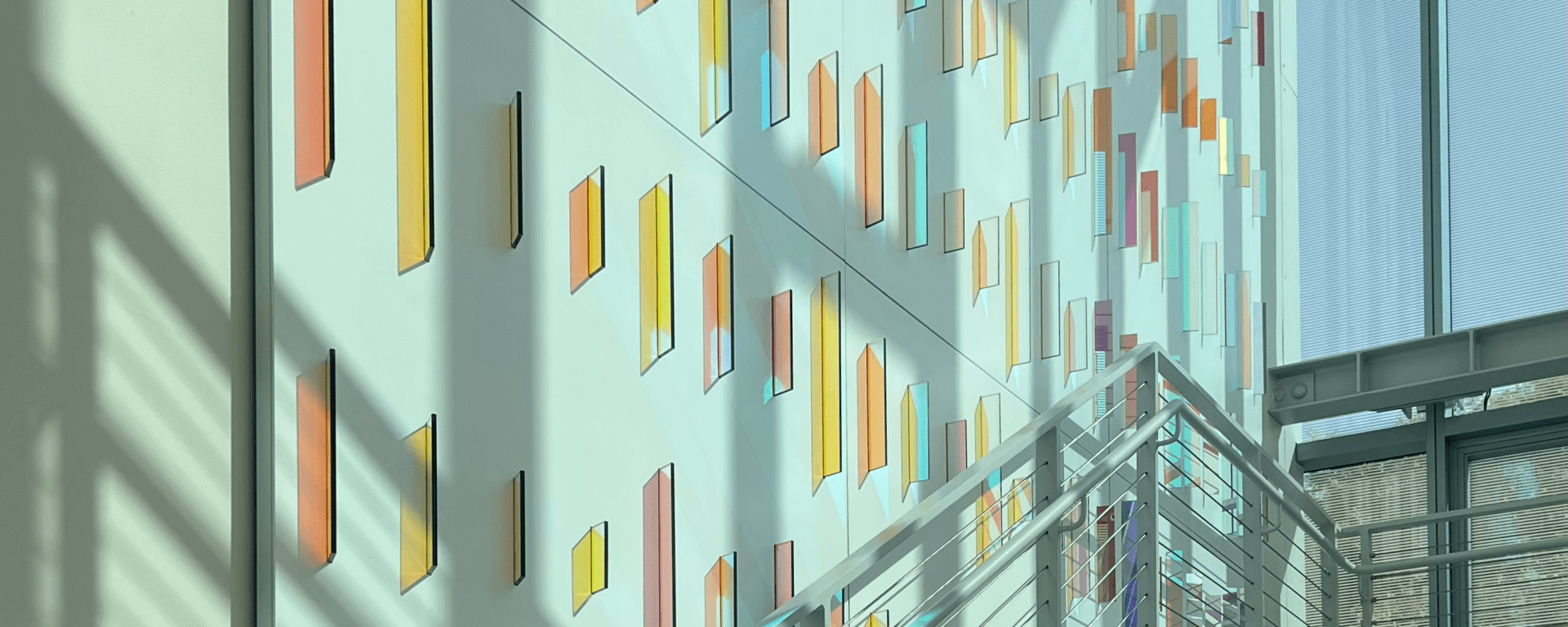
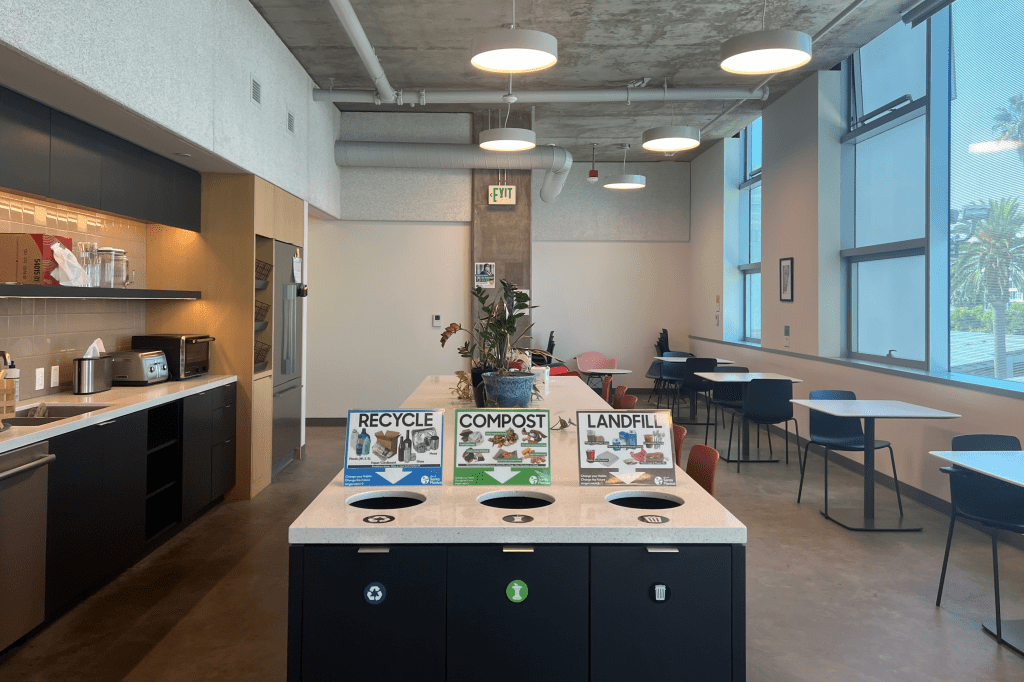
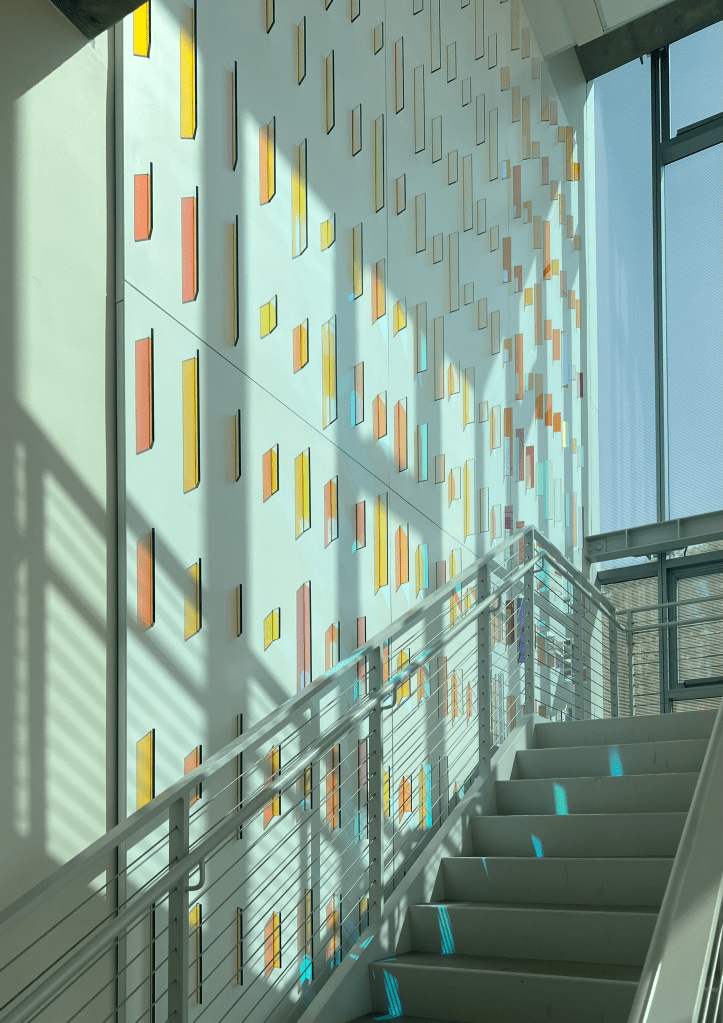
Beyond sustainable design choices, the building is intentionally crafted to be a welcoming space for its users. Each floor has art installations, a kitchen and break room, and its own color theme. Even the stairwell is pretty; the wall is lined with small rectangular mirrors that refract sunlight into an array of colors.

Additionally, these features can be economically feasible. Although the building’s sustainability measures led to a 9% increase in upfront costs, in the long term, it’s actually cash positive in 16 years in part because its smart design eliminates energy and water bill expenses.
Santa Monica City Hall East takes sustainability to the next level, aligning with the city’s broader commitment to climate action. However, Richane acknowledges that the Living Building Challenge is hard. Everyone who worked on the building experienced a steep learning curve, but as Richane points out, that means doing it again would be so much easier. Regardless, she says it’s okay to start small — every building can do one thing better.
 The Muddraker