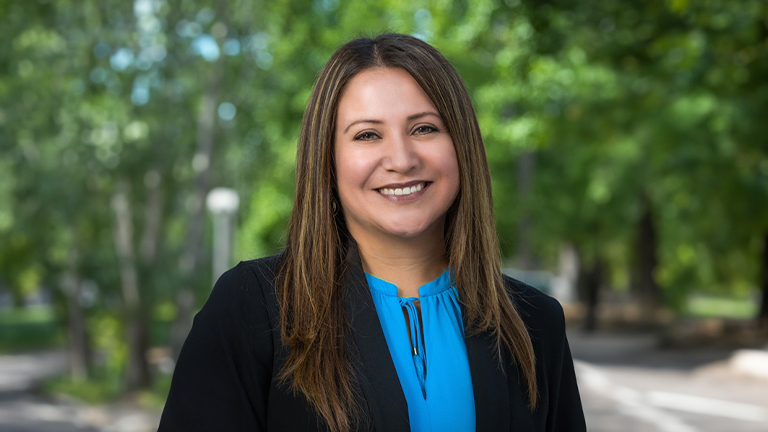
Mudd’s New Interim Vice President for Student Affairs and Dean of Students
Article by Shivani Manivasagan
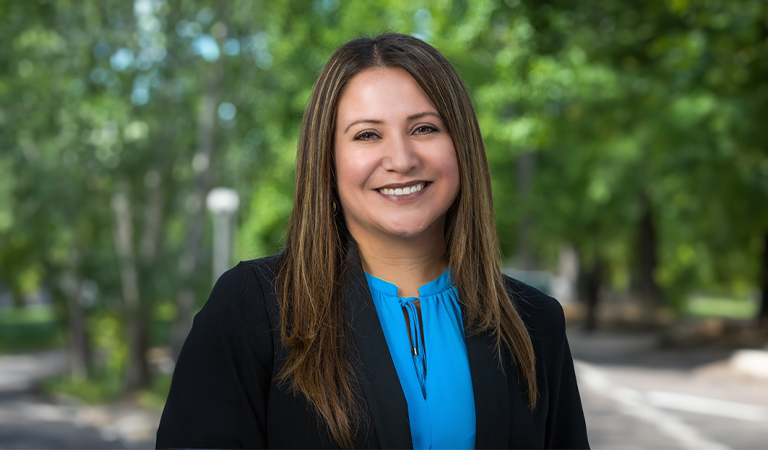
Q: What was your journey to becoming Dean of Students at Mudd?
I’m a first-generation college student, so education has always been important to me. I earned my undergraduate degree in biology with the intent to go to medical school. I started working in health education at City of Hope, a National Cancer Institute. There, a physician told me that if I worked at USC, I could get a Master’s degree paid for. Given the financial challenges I had as an undergrad, I decided to pursue a career in higher education.
I began working at USC’s School of Social Work, and within five years, I quickly moved up from a Program Assistant to a Director of Undergraduate Advising. That was such a rewarding experience; I felt that I was able to pay it forward and help other students navigate the college process. It didn’t feel like a job to me; it was a passion. I earned my Master of Education in Postsecondary Administration and Student Affairs.
The Assistant Vice President (AVP) of Student Affairs at USC at the time, who I consider a mentor, asked me to co-teach a class with her at USC called The Politics of Difference. As a high-level AVP who still taught in the classroom, she believed there was huge value teaching in the classroom while serving as an administrator. She told me to consider getting a PhD, and I eventually did, at the University of San Diego. Afterward, I followed in the footsteps of my mentor, working at USC as an administrator while also teaching. This was an incredibly fulfilling and enjoyable experience.
Fast forward almost 20 years of me working at USC — my daughter was applying for college, and she was admitted to USC, which was one of her top choices. I felt that this was my cue to leave, to let my daughter have her own experience.
I started looking at other options. As someone who grew up in Southern California, I’d always known about the Claremont Colleges. I looked at Harvey Mudd because I wanted to return to my passion — STEM education — but no positions were open at the time. That’s when I learned that Keck Graduate Institute was looking for their first official Dean of Students to help build their Division of Student Affairs by integrating their currently siloed offices into one division. I was intrigued; I love to build and improve systems. I remained on faculty at USC’s Annenberg School for Communication and Journalism, a position I’ve held since 2010. I love it because I teach students how to communicate strategy and change — it’s applicable to everything that I do, and I truly find so much joy from that.
I was at KGI for five years. In my last year, I was asked to run their Master of Science in Community Medicine program, but I remained open to other opportunities. Then, someone from Harvey Mudd contacted me, saying there was an external review report done on its Division of Student Affairs and Mudd was looking for someone who could review the feedback and make improvements. I was very intrigued because it was aligned with my experiences and what I teach. And that’s what brought me here.
Q: What does a typical day look like in your job? What are your responsibilities?
No two days are ever the same and I love that the day can be a bit unpredictable. My calendar will have meetings with students, administrators, and faculty, but there might also be a situation that needs to be elevated above any meeting that I go to. I support students and provide guidance on best practices; for example, when I meet with our DB and JB Chairs, I’m not making policies or running the system, but I ask: How can I support you? What can I do to help you? Is there any advice that you need?
Overall, I see myself as a liaison between students and administration — I take student input to help inform decisions we make in DSA. From the DSA external review report, I heard that students were concerned about staffing. They felt that staff had a lot of responsibilities on their plate; for example, the International Students and Scholars position also handled Institutional Diversity, as well as Study Abroad. By hiring more staff, we intend to let each of these positions have their own focus. That is a big win because I’m aligning what we’re doing now with what the students want, which is a major responsibility of my job.
Q: Recently, there have been several position openings in DSA. What has the hiring process been like?
We have five open positions in DSA, and my goal is for us to fill all of them by spring semester and send the community an update on how we’re responding to the external review report.
We’ve posted openings for the following positions: Associate Dean for Institutional Diversity, Assistant Dean for International Students and Scholars, Assistant Dean for Study Abroad, Assistant Dean for Accessibility Services, and Director of Career Services. The last position got posted later than the others, but we are still hopeful to have someone start in the spring semester.
We have different hiring managers for each position. For example, I’m the hiring manager for the Associate Dean for Institutional Diversity, Dean Karen is taking the lead on International Students and Scholars, and Dean Amy is handling Accessibility Services and Study Abroad. There are different people on the hiring committee for each position, depending on which groups the position would closely work with.
We’ve received around 20 to 40 applications for each position. First, we review each applicant with HR and HR conducts phone screenings. Then, the search committee conducts first round interviews. The search committee ranks the candidates and we bring the top two finalists to visit campus and meet the community. Based on community feedback, an offer is made to the top candidate.
It is exciting that five new people will possibly start at Mudd together. There is so much they will need to do, from meeting new people to understanding the culture. I didn’t have a formal onboarding process through the Division of Student Affairs, but given that experience, I have a better understanding of how I can develop one for these folks — because I just went through it myself.
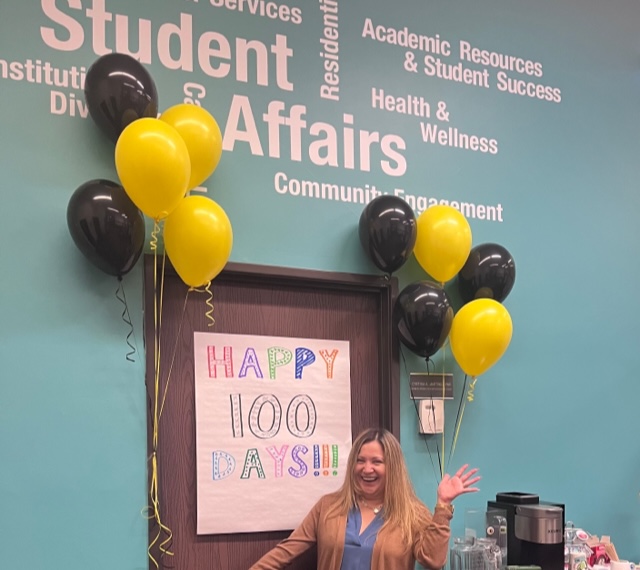
Q: What are your thoughts on Mudd? How is it different from your other experiences?
It’s definitely different from the grad population, just by nature of the age demographic. Here at Mudd, I love the strong sense of community. I love the dorm culture. I see how students are so committed to and involved with the school. You are all so brilliant, and I enjoy seeing student projects — like when the summer research students did their poster presentations. I feel at home, and I feel like Mudd is a good cultural fit for me.
Q: What do you enjoy doing in your free time?
I love playing with my three German Shepherds, Roxy, Zeus, and Ares — whether it be playing with them in the backyard, swimming with them in the summer, or taking them on hikes. I also love traveling, even just a quick weekend getaway with my husband and kids.
Q: Do you have any advice for students?
Try to find the consistent themes — your underlying passion — in the activities and extracurriculars you choose. For me, the common theme was helping people. Although biology and higher education seem different at first, there is common ground between me providing resources to cancer patients, and me providing resources to students. I’ve stayed true to what my passion was; although I thought it was going to be in health care, it ended up in higher education. There are so many transferable skills between your different interests.
Also, realize that you’re building your professional network right now. Faculty and staff are amazing resources, and the people in your classes, clubs, and extracurriculars may someday be your boss, or you may someday be their boss. It’s important to maintain professional relationships with each other — who knows, your paths may cross in the future.
 The Muddraker